
How Much Does a Website Cost in the UK? (And Why Every Project Is Different)
Planning a new website but unsure what it should cost? In this guide, we’ll explain what influences website pricing, what you should budget for and why every project is unique.
Thinking About a New Website?
One of the first questions people ask when planning a new website is:
“How much is this going to cost?”
It’s a fair question—but it’s also one of the hardest to answer with a single number.
Some websites cost a few hundred pounds.
Others cost several thousand.
The difference isn’t because one designer is “cheap” and another is “expensive.” It’s because every website has different goals, different functionality and different levels of complexity.
At KODO, we believe in being transparent. Rather than giving a one-size-fits-all answer, we’d rather help you understand what actually influences the cost of a website so you can make an informed decision.
Why There Isn’t a Fixed Price
Imagine asking:
“How much does a house cost?”
Without knowing the size, location or requirements, it’s impossible to give an accurate answer.
Websites work in much the same way.
A simple five-page brochure website is very different from an online shop with hundreds of products, booking systems and customer accounts.
Every project starts with understanding what your business needs.
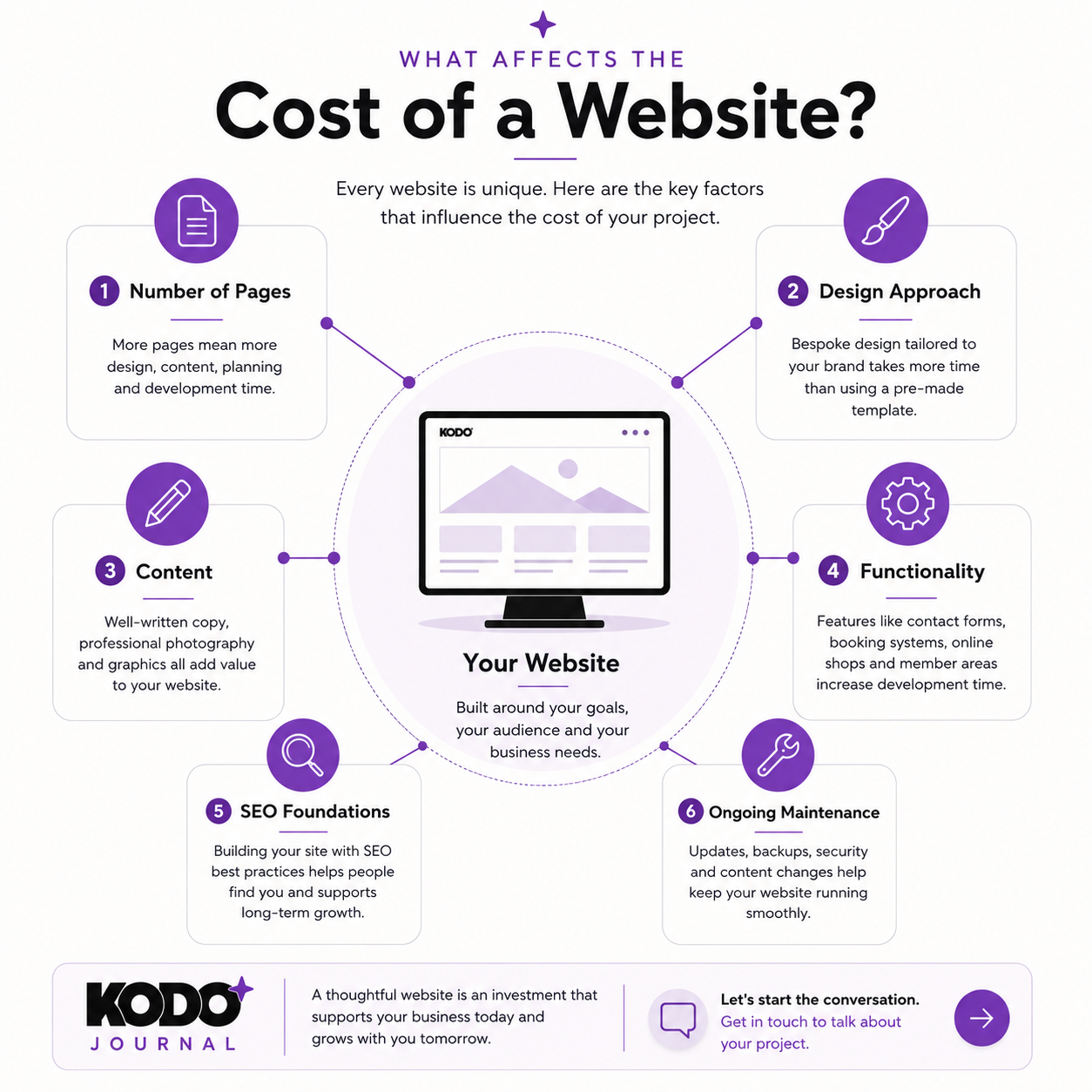
What Affects the Cost of a Website?
Several factors influence the cost of a website.
Number of Pages
A one-page landing page naturally takes less time to design and build than a website with ten or twenty pages.
More pages mean:
More layouts
More content
More planning
More testing
Bespoke Design vs Templates
Some businesses choose pre-made templates to reduce costs.
Others invest in a bespoke design that’s built around their business, audience and goals.
Neither approach is right or wrong—it depends on your priorities.
At KODO, we focus on creating thoughtful, bespoke websites that reflect each partner’s business rather than forcing them into a one-size-fits-all template.
Content Creation
Do you already have:
Website copy?
Professional photography?
Brand guidelines?
Logos?
If not, these may become part of the project.
Good content isn’t just decoration—it helps your website communicate clearly and build trust.
Functionality
Every additional feature requires planning, testing and ongoing maintenance.
Examples include:
Contact forms
Booking systems
Online shops
Member areas
Blogs
Newsletter sign-ups
Image galleries
Portfolio pages
The more functionality you require, the more time is needed to deliver it properly.
SEO Foundations
A website shouldn’t just look good—it should also be easy for search engines to understand.
Basic SEO often includes:
Page titles
Meta descriptions
Image optimisation
Logical page structure
Mobile responsiveness
Fast loading speeds
Building these foundations from the beginning helps your website perform better over time.
A Website Is More Than Design
One of the biggest misconceptions is that you’re paying for someone to make a website “look nice.”
In reality, a successful website combines:
Strategy
User experience
Copywriting
Accessibility
Mobile optimisation
SEO
Performance
Testing
Design
Each decision is made to help your visitors find information quickly and feel confident taking the next step.
Should You Choose the Cheapest Option?
Price is always an important consideration.
However, it’s worth asking a different question:
“What value will this website bring to my business?”
A website isn’t simply an expense.
It’s often your first impression, your sales tool and your digital storefront all in one.
Choosing the cheapest option isn’t always the most cost-effective decision if it doesn’t meet your business goals or needs replacing a year later.
-
Think about your website as an investment rather than a purchase. A thoughtfully planned website can continue attracting enquiries and supporting your business for years after it’s launched.
What Should You Budget For?
Every project is different, but it’s helpful to think beyond the initial build.
You may also need to budget for:
Domain registration
Website hosting
Ongoing maintenance
Content updates
Professional photography
Copywriting
Search engine optimisation
Future improvements as your business grows
Planning for these costs from the beginning helps avoid surprises later on.
How KODO Approaches Website Projects
At KODO, we don’t believe in recommending the biggest or most expensive solution.
We believe in recommending the right solution.
Every project begins with a conversation.
We take the time to understand your business, your audience and your goals before suggesting the most appropriate approach.
That means you only invest in the features that genuinely add value to your business.
Frequently Asked Questions
-
There isn't a single answer because every project is different. The final cost depends on the size of the website, the functionality required, the content available and the level of bespoke design involved.
-
Some websites use pre-built templates with minimal customisation, while others are designed from the ground up to meet specific business goals. The amount of planning, design and functionality required has a significant impact on the final cost.
-
Website builders can be an excellent option for some businesses, particularly those just starting out. However, as your business grows, you may benefit from a more tailored solution that reflects your brand and supports your long-term goals.
-
Yes. At KODO, we build websites that are straightforward to update, giving you the confidence to make everyday changes yourself. If you'd rather not, our KODO Care Plan is available to help with ongoing maintenance and minor content updates.
Final Thoughts
The cost of a website isn't determined by a single figure.
It's determined by the goals behind it.
A website built with care can become one of the hardest-working parts of your business—building trust, attracting enquiries and supporting your growth every day.
Rather than asking, "What's the cheapest website I can buy?", a better question is:
"What kind of website does my business need to achieve its goals?"
That's the conversation we'd love to have.
Ready to Plan Your Website?
Whether you're starting from scratch or replacing an existing website, KODO is here to help you understand your options and build something that's right for your business.
