
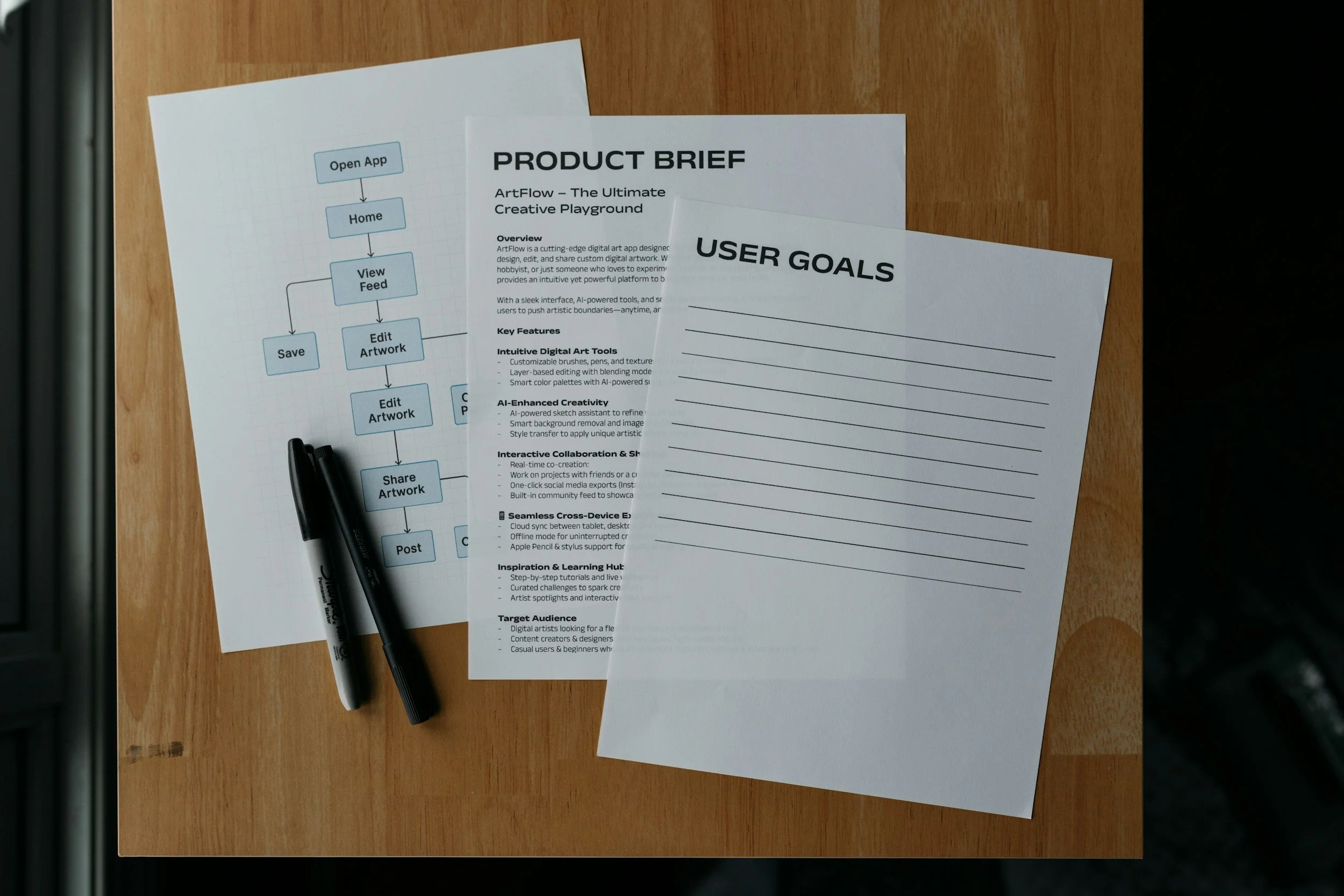
Why a Project Brief Matters
One of the biggest misconceptions about design projects is that they begin with sketches, colours or ideas.
In reality, they begin with understanding.
A project brief gives your designer the information they need to understand your business, your goals and the problem you're trying to solve. The clearer the brief, the easier it is to create work that's thoughtful, purposeful and aligned with your vision.
At KODO, we've found that the strongest projects aren't always those with the biggest budgets—they're the ones where everyone starts with the same understanding of success.
What Is a Project Brief?
A project brief is a document that outlines the key information about your project before any design work begins.
Think of it as a roadmap rather than a set of instructions.
It doesn't need to answer every possible question, but it should help your designer understand:
Who you are
What your business does
What you're trying to achieve
Who you're trying to reach
What success looks like
A good brief creates clarity, reduces misunderstandings and allows your designer to make informed creative decisions from the very beginning.
What Should a Project Brief Include?
1. Tell Us About Your Business
Start with the basics.
Who are you?
What products or services do you offer?
How long have you been trading?
What makes your business different from your competitors?
Don't worry about using marketing language—just explain your business naturally.
2. Define Your Goals
Every successful design project begins with a clear objective.
Ask yourself:
Are you launching a new business?
Do you need a more professional website?
Is your branding no longer representing your business?
Are you trying to attract a different audience?
Do you want more enquiries or sales?
The clearer your goals, the easier it is to measure success.
3. Describe Your Target Audience
Design isn't about appealing to everyone.
It's about connecting with the right people.
Think about your ideal customer.
Who are they?
What problems do they have?
What do they value?
Why would they choose your business?
Understanding your audience influences everything from layout and imagery to typography and tone of voice.
4. Explain the Scope of the Project
Be clear about what you're looking for.
For example:
A new website
A refreshed brand identity
Business stationery
Marketing materials
Social media graphics
The more specific you can be, the easier it is to recommend the right solution.
5. Share Your Inspiration
One of the easiest ways to communicate your preferences is through examples.
These could include:
Websites you admire
Brands you love
Colour palettes
Photography styles
Packaging
Social media accounts
Competitor websites
You're not asking your designer to copy these examples—they simply help communicate the feeling you're aiming for.
6. Discuss Budget and Timescale
Budget and deadlines don't limit creativity—they help shape realistic recommendations.
Being open about both allows your designer to suggest solutions that fit your circumstances and avoid surprises later in the project.
7. Define What Success Looks Like
Before your project even begins, ask yourself one simple question:
"How will I know this project has been successful?"
Perhaps success means:
Receiving more enquiries
Improving customer confidence
Launching your business professionally
Standing out from competitors
Feeling proud to share your website
Having a clear outcome keeps everyone working towards the same goal.
Common Mistakes to Avoid
Even the simplest project brief can be incredibly effective, but there are a few common pitfalls worth avoiding.
Focusing only on aesthetics
A project isn't successful simply because it looks good.
The design should support your business objectives.
Leaving out important context
Designers make better decisions when they understand your business, not just the deliverables.
Share the story behind the project.
Trying to solve everything at once
If your project has multiple objectives, prioritise them.
What's the single most important outcome?
Assuming your designer already knows
No one understands your business better than you do.
The more context you provide, the stronger the collaboration will be.
Project Brief Checklist
Before starting your project, see if you can answer the following questions:
✅ What does my business do?
✅ Why am I starting this project?
✅ Who is my ideal customer?
✅ What services do I need?
✅ Do I have any inspiration or examples?
✅ What is my preferred timeline?
✅ What is my approximate budget?
✅ What does success look like?
You don't need perfect answers—but having a clear starting point will help your project run more smoothly.
Frequently Asked Questions
-
A project brief helps communicate your goals, audience and expectations before work begins. It creates a shared understanding between you and your designer, helping the project run more smoothly.
-
It should include enough information for your designer to understand your business and your goals, but it doesn't need to be overly complicated. A clear, honest overview is often more valuable than pages of unnecessary detail.
-
Yes.
Even for smaller pieces of work, a brief helps avoid misunderstandings and ensures everyone is working towards the same outcome.
-
Absolutely.
If you're unsure where to start, we'll guide you through the process during our discovery conversation. Asking thoughtful questions is part of how we work.
Final Thoughts
A project brief isn't about having every answer before the project begins.
It's about creating the right foundation for collaboration.
The best design comes from understanding people, asking the right questions and making thoughtful decisions together. A well-prepared brief gives your designer the clarity they need to create work that's not only beautiful, but purposeful too.
At KODO, we see every project brief as the beginning of a partnership—not simply the start of another job.
